Advanced Shipping Quote
Shipping made simple—enter your to-and-from destinations, item weight, and preferred service level for a quick and accurate quote!


“AI is going to improve the overall visibility and information flow for our customer base, hands down.”
Artificial intelligence isn’t replacing supply chain professionals. It’s giving them faster access to the information they need to make better decisions.
Inventory levels change by the minute. Purchase orders are received. Trucks leave warehouses. Containers arrive at ports. Retailers adjust delivery schedules. Customers place new orders. Weather impacts transportation routes. Products move from manufacturers to distribution centers and finally into homes and businesses across the country.
For decades, most of that information lived in separate systems. Finding answers often meant jumping between software platforms, exporting spreadsheets, or making phone calls to multiple partners. Artificial intelligence is eliminating much of that complexity. Instead of spending valuable time searching for information, businesses can now ask questions and receive meaningful answers almost immediately. AI gathers information from multiple sources, organizes it, and delivers insights that help businesses respond more quickly and make better decisions.
That’s one of the reasons Massood believes AI will have such a significant impact on the logistics industry. “Instead of going to multiple websites looking for a shipment, customers will increasingly be able to ask, ‘Where is my Massood shipment that shipped on this date?’ AI is going to find it.”
That may sound like a small improvement, but its impact is enormous.
When businesses can access accurate information in seconds instead of minutes or hours, they can respond faster, communicate more effectively, and make decisions with greater confidence. Artificial intelligence isn’t replacing the information businesses already have – it’s making that information easier to access, understand, and act on.
One of the biggest misconceptions about AI is that it’s making decisions for people. In reality, its greatest strength is helping experienced professionals make better decisions.
By analyzing historical sales trends, purchasing behavior, inventory movement, transportation data, and operational performance, AI helps businesses recognize patterns that might otherwise go unnoticed.
Instead of reacting after a problem develops, businesses can often identify opportunities and challenges before customers ever notice them. That’s a powerful advantage in an industry where timing matters.
Perhaps one of the most practical applications of AI isn’t happening behind the scenes. It’s happening directly in the hands of customers.
Massood Logistics has recently introduced an AI-powered assistant within its warehouse management system that allows customers to interact with their inventory using everyday language.
“If you’re paying for a separate inventory management system just to get answers about your products, now ours can do that for you. Customers can simply ask for stock status, order updates, tracking information, reports, or even how many times a specific item has sold over the past three years. Just ask the question, and the AI pulls the information instantly. It’s about giving customers quick access to the insights they need to better understand how their products are performing.”
Instead of navigating multiple menus, manually creating reports, or searching through multiple systems, customers can simply ask a question.
Want to know your current inventory? Ask.
Need to check the status of an order? Ask.
Want to know which products have sold the most over the past three years? Ask!
Looking for a shipment that’s currently in transit? Ask. 🙂
Within seconds, the system retrieves the information and presents it in an easy-to-understand format so they can better understand their inventory and sales performance.
Instead of searching through dashboards or waiting for reports to be generated, customers receive immediate answers that help them make better business decisions. It’s a smarter, faster way to interact with information, and it’s changing expectations for warehouse management systems.
Rather than functioning solely as inventory databases, today’s warehouse platforms are becoming intelligent business tools that help customers understand how their products are performing, where opportunities exist, and what actions should be taken next. For manufacturers, retailers, and distributors, that’s a significant advantage.
Artificial intelligence is also changing what happens behind the scenes.
Inside the warehouse, modern systems can identify picking patterns, recommend more efficient storage locations, improve inventory visibility, and help reduce unnecessary travel throughout the facility. These improvements may seem small individually, but together they create faster fulfillment, greater accuracy, and more efficient operations.
Outside the warehouse, AI is transforming transportation in much the same way. Instead of relying solely on static routes and manual planning, today’s transportation systems continuously evaluate traffic conditions, weather, delivery schedules, and driver availability to recommend more efficient routes throughout the day. Drivers benefit from better mobile technology, real-time updates, and simplified delivery management, making the entire delivery process more efficient for everyone involved.
For Massood, transportation is one of the areas where artificial intelligence is already making a measurable difference.
“One of the biggest advances we’ve seen is in routing software and driver interfaces. They’ve made deliveries more efficient by giving drivers better routing, real-time information, and a much easier way to manage delivery completions and customer communications.”
The technology continues to evolve, but its purpose remains remarkably simple: improving the way products move. From more efficient warehouse operations to better transportation planning, AI is helping logistics teams reduce friction, improve accuracy, and create a more predictable experience for customers.
Artificial intelligence is transforming nearly every aspect of supply chain management, but not every supply chain faces the same challenges.
Moving furniture isn’t like shipping a pair of shoes or a small package through an automated parcel network.
Most furniture is large, heavy, often fragile, and rarely standardized. One shipment may include a sectional sofa, another a dining room table with six chairs, and another an entire bedroom collection. Every product has different dimensions, handling requirements, delivery locations, and customer expectations.
That complexity changes everything.
Success isn’t measured simply by whether a shipment arrives. It’s measured by whether it arrives on time, undamaged, and delivered exactly as the customer expects.
It requires people who understand the products they’re handling, the retailers they’re serving, and the countless variables that can change between pickup and final delivery.
Artificial intelligence can help organize the information surrounding those shipments, but furniture logistics requires a level of coordination and understanding that goes beyond data. The complexity of the products, the delivery environment, and the customer expectations all require a logistics partner who understands what happens between the warehouse and the final destination.
One observation has surprised Massood as AI has continued advancing across the logistics industry. Despite all the new technology, moving furniture and other oversized products remains an incredibly hands-on business.
Unlike small parcel shipping, every furniture shipment presents unique handling requirements. Products vary in size, weight, packaging, fragility, and delivery environments. Some require inside delivery. Others require room-of-choice placement, assembly, debris removal, or specialized equipment. No algorithm can physically move a sectional sofa through a narrow doorway. No software can safely assemble a bedroom suite inside a customer’s home. No automation can replace the judgment required when handling valuable merchandise that arrives in countless shapes, sizes, and configurations.
“Technology has greatly improved the information surrounding the products. But when it comes to big and bulky logistics, people are still essential to physically moving those products successfully.”
AI continues improving every stage surrounding the product, from order processing and inventory management to transportation planning and shipment visibility but the physical movement of oversized products still depends on skilled professionals who understand proper handling techniques, customer expectations, and the unique challenges of the furniture industry.
“AI is going to greatly enhance everything from point of order, to receipt, to fulfillment, to delivery.. but what AI can’t do at this stage is replace the manpower or human touch necessary that come with big and bulky products. Furniture comes in countless shapes and sizes, and it still takes experienced people to safely receive, warehouse, move, and deliver those products. It still can’t replace the manpower or the specialized people who understand the products, the markets, and the industry they’re serving.”
One question often comes up whenever artificial intelligence is discussed. Will AI eventually replace logistics professionals? For Massood, the answer is clear. Not in big and bulky logistics.
Furniture logistics involves physical touchpoints that simply don’t exist with many smaller products.
Technology can’t physically maneuver a king-size bed through a narrow hallway. It can’t determine the safest way to secure an oversized entertainment center on a truck. It can’t reassure a customer whose delivery has been delayed because of severe weather. Those responsibilities still belong to experienced people.
One observation has stood out to Massood as AI continues advancing across the logistics industry.
“What has surprised me most is how much big and bulky logistics remains manual. Technology has greatly improved the information surrounding the products, but when it comes to big and bulky logistics, people are essential to physically moving those products successfully.”
That statement perfectly captures where the industry stands today. Artificial intelligence has transformed the digital side of logistics.
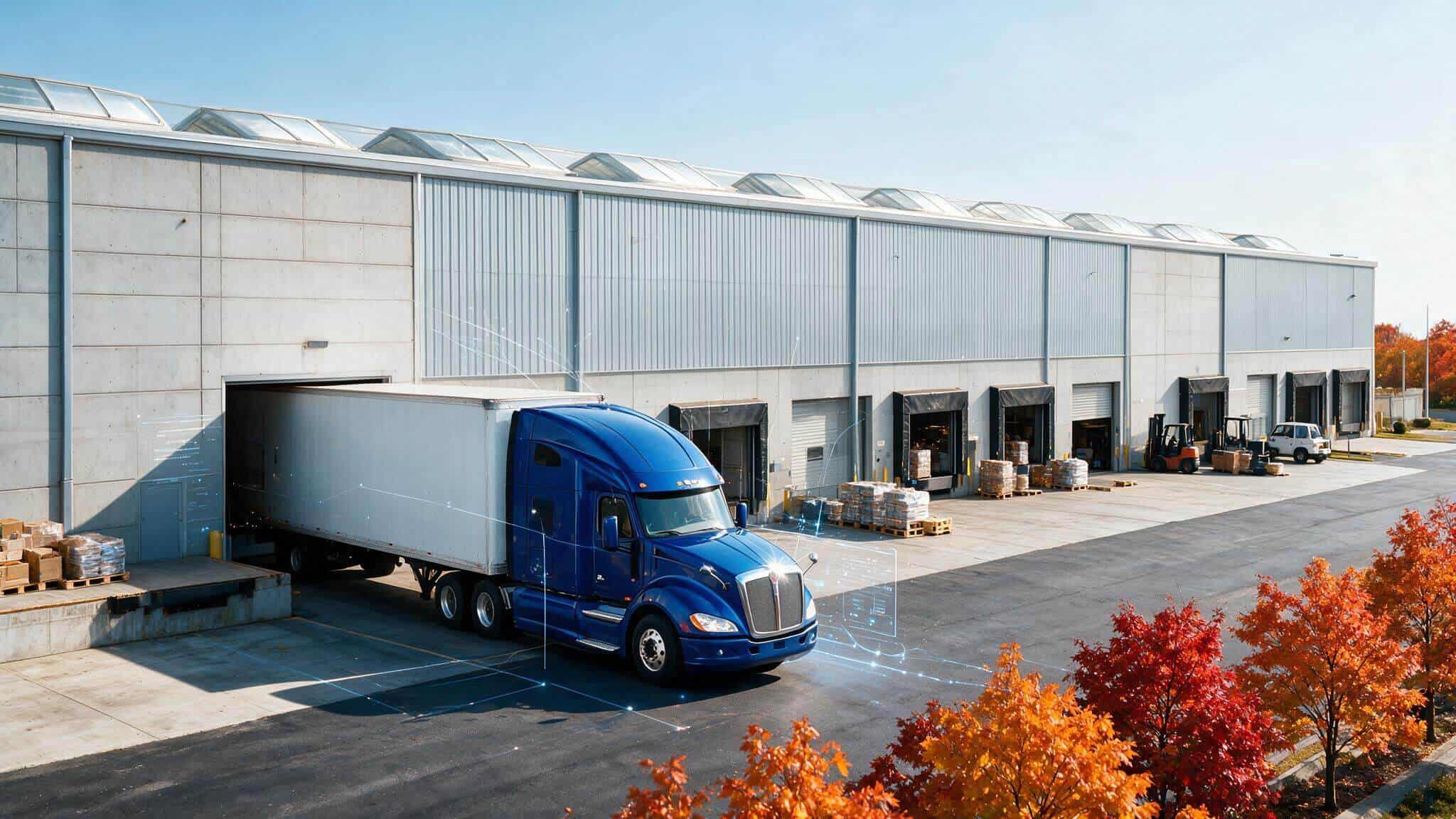
But once that truck backs up to the loading dock, experienced warehouse teams still receive every product.
As impressive as artificial intelligence has become, successful furniture logistics still depends on professionals who know how to adapt, communicate, and solve problems when conditions change. Technology can improve the process, but experience is what ensures customers receive the service they expect.
Technology has made logistics smarter. People still make logistics happen.
Artificial intelligence isn’t the only technology reshaping logistics. Behind the scenes, another major shift is quietly improving how information moves across the supply chain. For years, many companies relied on Electronic Data Interchange, or EDI, to exchange information between business systems. While EDI has served the industry well, it can be rigid and slower to adapt as business needs evolve.
Today’s supply chains are increasingly moving toward Application Programming Interfaces, better known as APIs. APIs allow warehouse management systems, transportation platforms, customer portals, e-commerce systems, and business software to communicate much more seamlessly. According to Massood, this transition represents one of the most significant technology improvements happening today.
“Another major improvement has been moving toward API integrations rather than traditional EDI. APIs allow systems to communicate more seamlessly and provide faster, more flexible access to information throughout the supply chain.”
For customers, that means faster updates, better visibility, and a more connected experience across every stage of the supply chain.
It’s another example of how connected technology is removing barriers throughout the supply chain. By allowing systems to communicate more effectively, APIs create a more seamless flow of information between businesses, warehouses, transportation partners, and customers.
Artificial intelligence and human expertise aren’t competing forces.
They’re complementary.
Technology brings speed. People bring judgment.
Technology recognizes patterns. People understand context.
Technology delivers information. People make decisions.
The future belongs to organizations that embrace intelligent technology while continuing to invest in experienced people who understand the complexities of transportation, warehousing, customer service, and big and bulky logistics.
Artificial intelligence is still evolving, and its role in supply chain management will continue to grow.
In the years ahead, AI will become even better at forecasting demand, optimizing warehouse operations, improving transportation planning, and providing real-time visibility across every stage of the supply chain. Businesses will gain faster access to information, better operational insights, and more opportunities to improve efficiency.
Those advancements will reshape the way supply chains operate. But they won’t change what customers ultimately value. Manufacturers want dependable warehousing. Retailers want accurate inventory. Consumers want their furniture delivered on time and in perfect condition.
Meeting those expectations will continue to require a combination of technology and expertise. The companies that succeed will be the ones that use AI to improve efficiency while continuing to invest in the people who make those improvements possible.
At Massood Logistics, technology isn’t adopted simply because it’s new. It’s adopted because it helps customers operate more efficiently, make better decisions, and gain greater visibility into their business.
Whether that’s investing in AI-powered warehouse intelligence, improving transportation technology, expanding API integrations, or providing customers with faster access to inventory and shipment information, every investment is focused on delivering a better customer experience.
Artificial intelligence isn’t replacing the relationships Massood has built over decades. It’s strengthening them. Customers still want a logistics partner they can trust. They still want knowledgeable people who answer the phone, solve problems, communicate proactively, and adapt when challenges arise. AI simply gives those people better tools to serve customers.
One of the biggest misconceptions surrounding artificial intelligence is that automation will eventually replace expertise. In furniture logistics, the opposite is proving to be true.
The more information businesses have, the more valuable experienced professionals become.
Technology may identify a transportation delay, but experience determines the best solution. Technology may highlight inventory trends, but experienced teams understand what actions to take next. Technology may optimize warehouse operations, but people ensure valuable products are received, stored, handled, and delivered with the care customers expect.
As AI becomes more sophisticated, experienced logistics professionals won’t become less important. They’ll become more valuable because they will have better information available to them than ever before.
As Massood explains:
“AI is going to improve the information surrounding every shipment. But it still requires specialized people who understand the products, the industry, and the markets they’re serving.”
Artificial intelligence enhances expertise. It doesn’t replace it.
For years, businesses have asked whether technology will eventually replace people in the supply chain.
That’s the wrong question.
The better question is this:
How can technology help experienced people do their jobs even better?
That’s exactly where the industry is headed.
Artificial intelligence can analyze millions of data points in seconds.
It can improve forecasting.
It can surface inventory insights.
It can optimize routes.
It can track shipments across multiple transportation networks.
It can help customers retrieve information simply by asking a question.
What it cannot do is replace the relationships, judgment, adaptability, and problem-solving that define exceptional logistics providers.
The strongest supply chains won’t belong to companies with the most technology.
They’ll belong to companies that combine intelligent technology with experienced people who know how to put that information to work.
That’s where the real competitive advantage lies.
Artificial intelligence is transforming supply chain management in remarkable ways.
It is improving visibility, streamlining warehouse operations, enhancing transportation planning, strengthening inventory management, and giving businesses faster access to the information they need every day.
Those advancements are helping manufacturers, retailers, and distributors operate more efficiently than ever before.
At Massood Logistics, we’re excited about what AI makes possible.
Our customers are already benefiting from AI-powered warehouse intelligence that allows them to ask questions about their inventory, sales history, shipment status, and product performance in plain language. Behind the scenes, modern transportation systems, warehouse technology, and API integrations continue improving visibility and communication throughout the supply chain.
We’re committed to continuing that investment because better technology creates better customer experiences.
But after decades in furniture logistics, we’ve learned something technology alone can’t replace.
The most successful supply chains are built on trust.
They’re built on communication.
They’re built on relationships.
And they’re built on experienced professionals who know how to solve problems when the unexpected happens.
Artificial intelligence is making supply chains smarter.
Experienced people are making them stronger.
That’s why we believe the future of logistics isn’t about choosing between technology and human expertise.
It’s about combining the strengths of both.
Technology makes supply chains smarter.
Experience still delivers.
Looking for a furniture warehousing or distribution partner who understands home furnishings from the inside out? Let’s build the right solution… together.
Whether you’re scaling your business or rethinking your supply chain, we’re here to help make the next move easier.