Advanced Shipping Quote
Shipping made simple—enter your to-and-from destinations, item weight, and preferred service level for a quick and accurate quote!


There is no single universal U.S. size threshold that defines a product as big and bulky. A better approach is to assess the shipment through several operational questions:
Oversized furniture often exceeds the limitations of standard shipping equipment and delivery spaces. Long or wide pieces may require specialized handling because they cannot easily fit through conveyor systems, delivery vehicles, elevators, or doorways. A king-size headboard, for example, may require non-conveyable freight handling.
Heavy furniture requires the right equipment and personnel to move safely. Items such as solid wood dressers, large dining tables, and oversized cabinets may require liftgates, furniture dollies, or two-person crews to prevent injuries and reduce the risk of product damage during handling and delivery.
Furniture doesn’t have to be heavy to require specialized care. Delicate finishes, glass surfaces, mirrors, and upholstery are vulnerable to scratches, cracks, and other damage during transportation. Proper protective packaging, careful handling, and secure loading help protect these products throughout the shipping process.
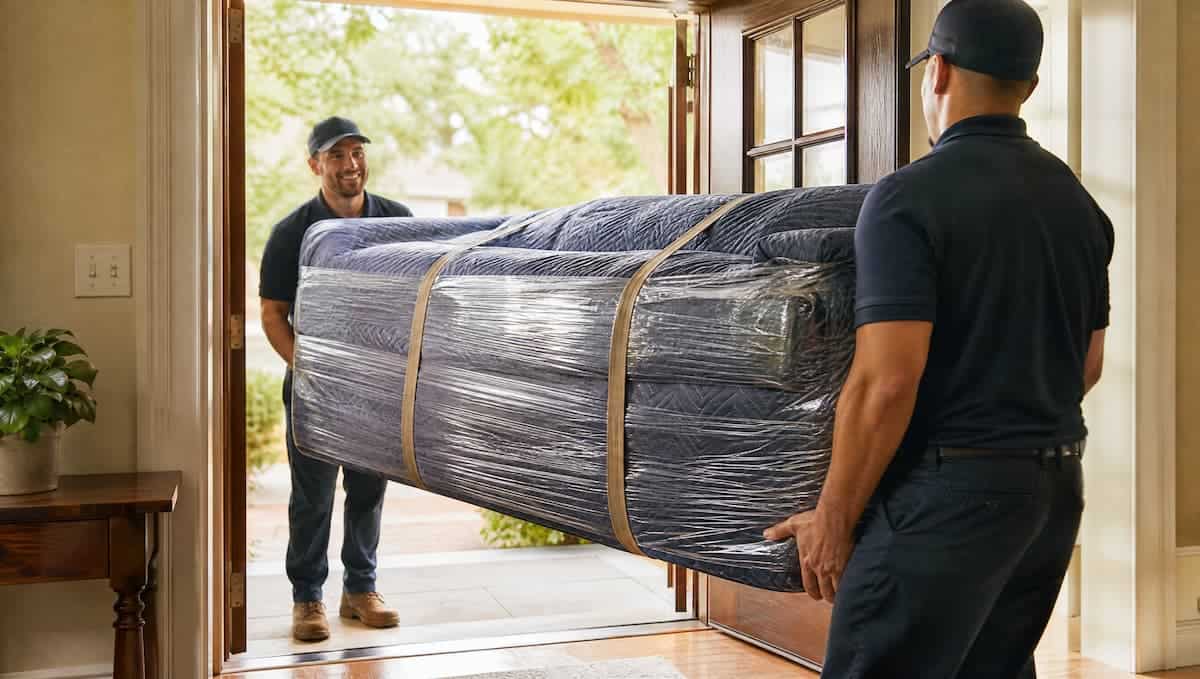
Successfully transporting furniture is only part of the challenge. Narrow hallways, staircases, elevators, limited parking, and building restrictions can complicate the final delivery. A large sofa may fit comfortably inside a delivery truck but prove impossible to maneuver through an apartment building’s elevator or stairwell.
Irregularly shaped furniture presents unique challenges for storage, loading, and transportation. Curved sectionals, oversized chairs, and unusually shaped tables cannot always be stacked or positioned like standard cartons. These products often require additional planning to maximize trailer space while maintaining safe handling conditions.
The level of service required often depends on the furniture being delivered and the customer’s expectations. Premium furniture purchases may call for scheduled appointments, room-of-choice placement, unpacking, or packaging removal. Understanding these requirements before shipping helps ensure the delivery experience matches what the customer was promised.
This framework matters because two products with similar dimensions can require very different logistics plans. A boxed outdoor bench delivered to a ground level home may be suitable for curbside service. A similarly sized upholstered sofa headed to a fourth floor apartment may require appointment scheduling, building coordination, room of choice placement, and a trained crew.
Exception costs are where ordinary logistics models often fall short.
Consider a customer who receives a damaged dining table after waiting several weeks. The brand may need to arrange a return, ship a replacement, pay delivery labor twice, inspect the returned unit, and decide whether it can be repaired, resold, or written off. The freight invoice may be only a portion of the actual loss.
For brands assessing outsourced operations, the logistics of furniture warehousing should be evaluated alongside transportation. Safe final mile delivery begins with how products are received, stored, picked, packed, and staged before they ever reach a truck.
Specialized big and bulky logistics requires more than extra space or additional handling. They demand a coordinated approach to warehousing, inventory management, transportation, and final delivery. Each stage must account for the unique challenges of moving large furniture while protecting product condition, maintaining efficiency, and ensuring a consistent customer experience.
A furniture warehouse is not just a place to store inventory. It is a control point for condition, accuracy, and shipment readiness. Oversized fulfillment may require wide aisles, high bay storage, cantilever racking, dock capacity, oversized packing areas, forklifts, furniture dollies, protective blankets, and space to inspect inbound products.
The difference is visible in the workflow. In a standard parcel environment, a product may be picked, labeled, and sent down a conveyor. In a furniture focused operation, the team may inspect the carton, confirm the SKU and condition, apply protective materials, stage the item for its route, and secure it based on its shape and destination service level.
That process can feel slower on paper. In practice, it may reduce downstream delays. A damaged item discovered at the warehouse is far easier to resolve than one discovered in a customer’s living room after a delivery crew has left.
At Massood Logistics, decades of furniture handling and shipping experience supports an approach built around the realities of oversized products. Our furniture logistics services are designed to connect warehousing, fulfillment, transportation, and final mile execution rather than treating each stage as a separate problem.
Protecting furniture throughout the supply chain requires more than careful transportation. From protective packaging and warehouse storage to loading, unloading, and final delivery, every handling decision affects product condition. The right processes help minimize damage, reduce costly returns, and ensure furniture arrives in saleable condition, ready to meet customer expectations.
Furniture damage is often caused by a chain of small failures, not one dramatic event. Inadequate corner protection, weak carton reinforcement, poor palletization, incompatible freight stacked nearby, or insufficient load restraint can all create damage exposure.
A specialized operation addresses those risks before dispatch. That includes matching packaging to the product’s weak points, staging freight to avoid unnecessary movement, and using the right equipment for loading and unloading. Liftgates are important when a residential location has no dock. Two person crews are important when an item is too heavy, awkward, or fragile for one person to move safely. Protective blankets matter when finished goods are transported outside a fully boxed configuration.
The appropriate service depends on the delivery environment. More service is not automatically better. A simple, fully boxed item delivered to a business with a loading dock may not need white glove delivery. A high value credenza going to a residence with stairs and a narrow entry likely needs a more controlled plan.
Tracking has become expected, but a tracking number alone does not solve a delivery problem. Meaningful shipment visibility should support decisions: Has the product been received? Was it inspected? Is it staged for final mile? Has the appointment been confirmed? Is there an access issue? Has the recipient approved a rescheduled date?
Data analytics and transportation technology can improve route planning, appointment coordination, inventory management, and exception handling. Yet technology must be paired with operational ownership. If a system flags that a customer has not confirmed an appointment, someone still needs to act before the truck is loaded.
Coverage also needs careful review. Nationwide service does not automatically mean every ZIP code has the same equipment availability, appointment capacity, rural reach, or installation capability. A furniture brand should ask what service level is available in the actual delivery areas that matter most, not just whether a carrier can technically reach the ZIP code.
The final mile is where logistics performance becomes the customer’s experience with your brand. For big and bulky furniture, delivery costs, handling requirements, and service expectations directly influence customer satisfaction and profitability. Defining the right delivery approach helps reduce unexpected expenses, prevent service failures, and ensure every order arrives with the level of care customers expect.
Terms such as curbside, threshold, room of choice, white glove, assembly, and installation are often used interchangeably. They are not the same service. Clear definitions protect both the customer experience and the brand’s cost control.
Choosing the right last-mile furniture delivery service is an important part of big and bulky logistics planning. From cost-effective threshold delivery to premium white glove service and expedited shipping, each option carries different handling, scheduling, and customer experience considerations. Defining these requirements before an order ships helps protect margins, reduce delivery complications, and maintain brand confidence.
Typical scope: In-home placement, unpacking, and packaging removal.
Customer responsibility: Confirm assembly and installation needs.
Best fit: Premium furniture requiring specialized care and setup.
Typical scope: Delivery inside the first accessible doorway.
Customer responsibility: Handle further movement, unpacking, and setup.
Best fit: Furniture deliveries with minimal handling needs.
Typical scope: Priority handling and faster delivery coordination.
Customer responsibility: Confirm deadlines, access, and special requirements.
Best fit: Urgent orders and time-sensitive furniture shipments.
Fair warning: white glove does not automatically mean installation.
Brands should define whether assembly, wall attachment, packaging removal, debris disposal, and old product removal are included.
Ambiguity creates customer disappointment and unexpected charges.
Successful big and bulky furniture delivery begins long before the truck arrives. Narrow doorways, staircases, elevator restrictions, limited parking, and difficult access points can create unexpected delays, additional costs, and potential product damage. Screening these conditions before dispatch allows logistics teams to plan the right equipment, crew, and delivery approach, helping ensure a smoother final-mile experience.
A delivery can fail even when the product is undamaged and the address is correct. The issue may be a narrow doorway, a restricted elevator, unavailable loading zone, steep driveway, gated community, low overhead clearance, apartment building rule, or customer who cannot be present during the appointment window.
A pre dispatch delivery access survey turns those unknowns into planning data. It can collect practical information such as:
This is not unnecessary friction. It is a way to prevent a truck arriving with the wrong crew, the wrong vehicle, or an incomplete service plan. If a sofa cannot clear a narrow stairwell, discovering that before dispatch gives the brand options. Discovering it at the doorstep creates a failed delivery, a frustrated customer, and added cost.
Returns are especially expensive in big and bulky logistics because the product may need a scheduled pickup, protective handling, inspection, storage, repair, resale, recycling, or disposal. Treating returns as an afterthought can turn recoverable inventory into a total loss.
A strong reverse logistics process begins with condition documentation.
Was the item refused at delivery? Was it damaged in transit? Is it unopened but unwanted? Is there a minor cosmetic defect that can be repaired? The answer influences whether the item can return to sellable inventory, move through an outlet channel, be refurbished, or be removed from circulation.
Brands should also separate carrier damage from customer caused damage and manufacturing defects. These categories have different financial and operational implications. The goal is not to make returns difficult. It is to make them traceable, controlled, and proportionate to the item’s value.
For companies that need a coordinated path from stored inventory through outbound movement and returns, furniture distribution services can help align transportation decisions with inventory recovery and customer service requirements.
Big and bulky logistics has a real environmental footprint because large products consume more cube, require more careful routing, and may generate return transportation when deliveries fail. Sustainability is not limited to a single fuel choice. It also includes reducing preventable miles, minimizing damage, improving trailer utilization, consolidating appropriate freight, and avoiding unnecessary replacement shipments.
The tradeoff is important. Packing every item with excessive material may reduce some damage risk but increase material use and handling time. Under packing can generate replacement shipments and waste. The most sustainable approach is usually product specific: use the protection needed for the product’s risk profile, then validate results through damage and return data.
Big and bulky logistics involves more than moving oversized furniture from one location to another. From specialized warehousing and careful handling to final mile delivery, these are the key considerations furniture brands should keep in mind.
Furniture focused logistics partners provide the handling discipline, warehousing controls, and delivery coordination that oversized products demand.
Big and bulky logistics covers warehousing, fulfillment, transportation, and delivery for products that exceed ordinary parcel handling limits because of size, weight, shape, fragility, or service requirements. Furniture, appliances, mattresses, fitness equipment, and certain building materials commonly fit this category.What Does Big And Bulky Logistics Mean?
Furniture should generally move by LTL when it is too large, heavy, irregular, or fragile for standard parcel networks. LTL can work well for business deliveries and palletized freight, but residential final mile needs may require additional services such as liftgate delivery, appointments, inside placement, or a two person crew.When Should Furniture Move By LTL Instead Of Parcel?
Curbside delivery typically places the product near the exterior of the delivery location. White glove delivery generally adds inside placement, unpacking, and packaging removal. Assembly and installation may be included, but they should never be assumed without confirming the service scope.What Is The Difference Between Curbside And White Glove Delivery?
No. The right crew size depends on item weight, dimensions, fragility, packaging, delivery environment, and service level. A durable boxed item going to a dock may be manageable with standard freight handling. A heavy dresser going up stairs or a delicate table requiring room placement may require two people for safety and product protection.Does Every Big And Bulky Delivery Require Two People?
Costs rise because large products use more trailer space, require specialized equipment, receive more manual handling, and may need appointments or inside delivery. The freight rate is only part of the cost. Liftgates, storage, redelivery, access constraints, claims, returns, and installation can all affect the final delivered cost.Why Are Big And Bulky Shipping Costs Higher?
Brands should collect delivery address details, customer availability, building restrictions, parking conditions, stairs, elevator access, door measurements when relevant, room placement needs, and whether assembly or debris removal is required. This information helps match the shipment with the correct equipment and service level.What Information Should Be Collected Before Furniture Delivery?
First, document the reason for failure: no customer present, access issue, damage, refusal, or incomplete order. Then determine whether the shipment should be redelivered, returned, repaired, replaced, or held for customer instruction. A clear exception workflow reduces repeat failures and protects inventory value.How Should A Brand Handle A Failed Furniture Delivery?
No. Geographic reach is only one factor. Brands should also evaluate service consistency, rural coverage, appointment capacity, local delivery equipment, crew availability, damage controls, tracking, room of choice capability, and whether assembly or installation is available where customers need it.Does Nationwide Coverage Guarantee Reliable Furniture Delivery?
Furniture delivery is not the final administrative step after a sale. It is the moment when the product, the promise, and the customer experience meet. We believe brands should choose big and bulky logistics partners that understand this responsibility and can protect inventory, margins, and customer trust at every handoff.
From specialized furniture warehousing and fulfillment to nationwide distribution and final mile delivery, Massood Logistics helps furniture brands manage the challenges of shipping oversized products.
Our experience in furniture logistics allows us to provide coordinated solutions that help protect your inventory, reduce delivery complications, and support a better customer experience.